NDMU Students Present Research, Biology Major Wins an Award at Statewide Microbiology Symposium
Ema Hrvat ’27 Places Third in the J. Howard Brown Award for Outstanding Undergraduate Research Competition
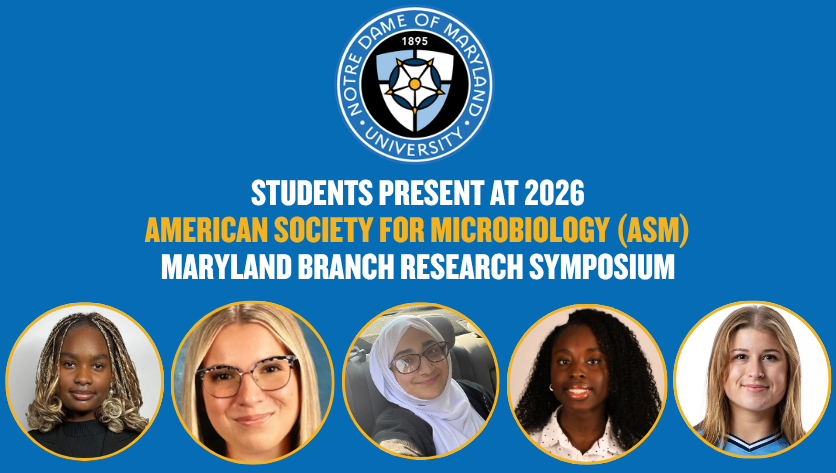
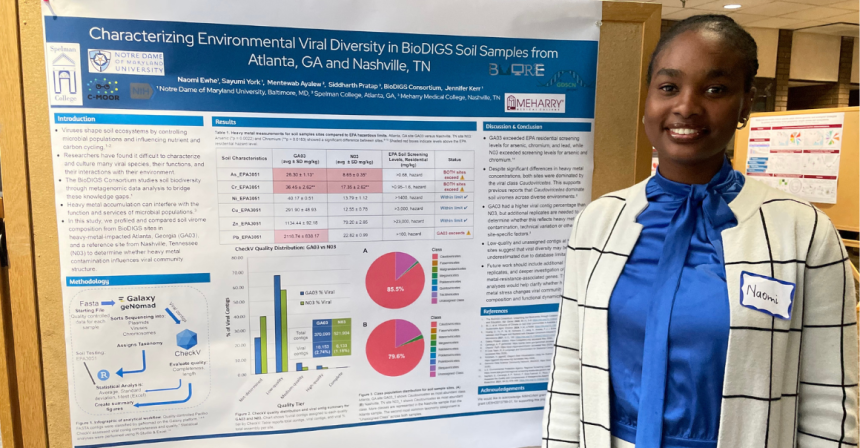
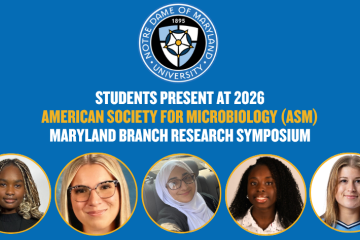
From left to right: Naomi Ewhe ’27, Ema Hrvat ’27, Zara Ahmad ’28, Odelia Nanou ’28, and Eleanor Flores ’27
By: Sabrina Miller, Content Strategy Director, University Communications
BALTIMORE, Md. – Five student researchers from Notre Dame of Maryland University presented their findings – and one biology major placed third for research excellence – at this year’s American Society for Microbiology (ASM) Maryland Branch Research Symposium.
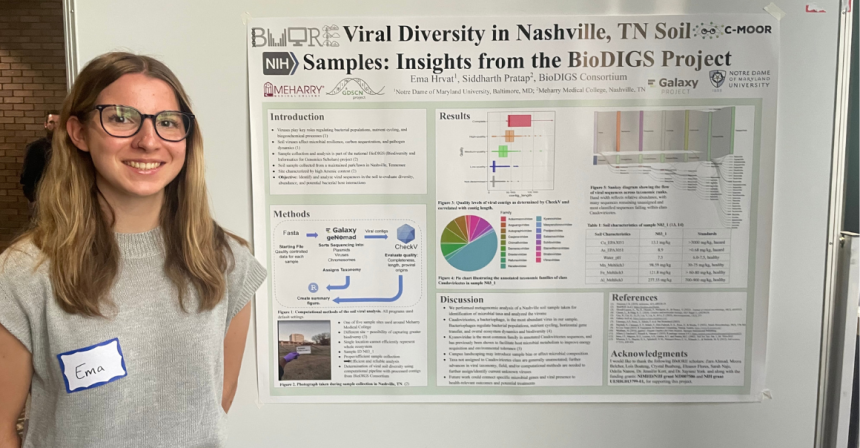
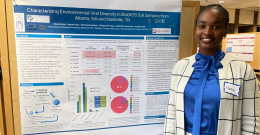
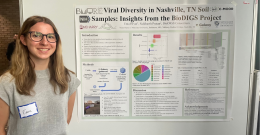
Ema Hrvat ’27 earned third place in the ASM Maryland Branch's J. Howard Brown Award for Outstanding Undergraduate Research competition. Hrvat’s project examined soil samples collected from a school in Tennessee and was recognized for effectively communicating the significance, methods, findings, and broader impact of the research. Hrvat will continue her work in NDMU's advanced research program this fall. The J. Howard Brown Award is presented to an outstanding graduate and undergraduate student who is making worthy contributions in the field of microbiology. It recognizes exceptional student scholarship and scientific communication.
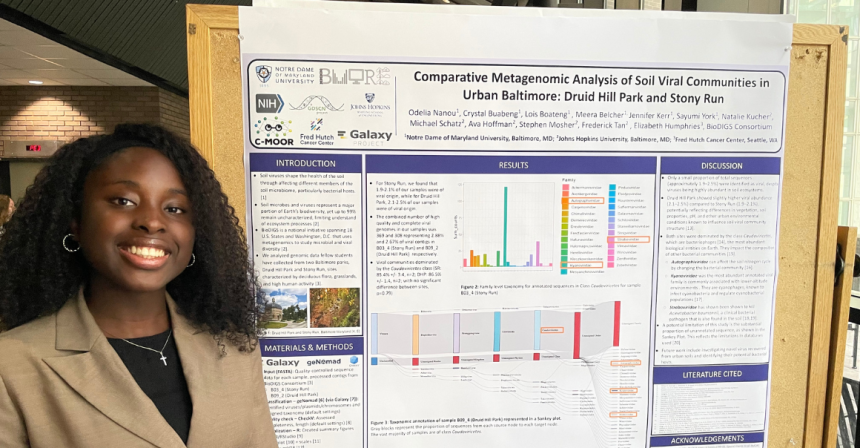
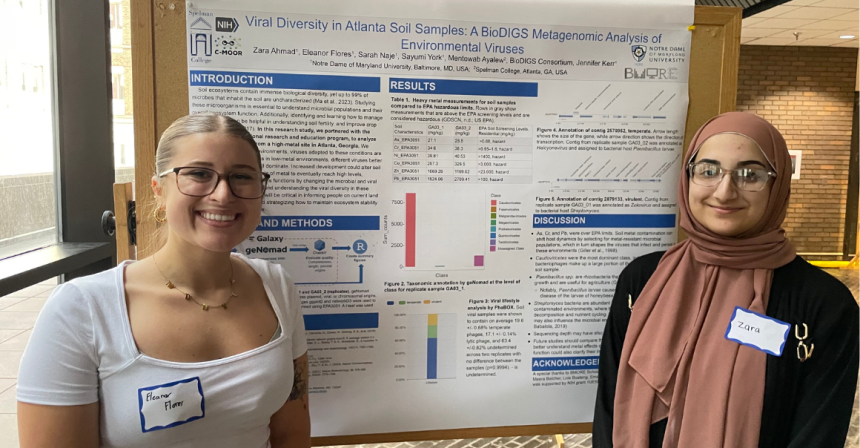
In addition to Hrvat, biology majors Zara Ahmad ’28, Naomi Ewhe ’27 and Odelia Nanou ’28, along with health sciences major Eleanor Flores ’27, presented their findings at the symposium, showcasing the University's commitment to undergraduate research and scientific discovery. For many of the students, the symposium marked their first experience conducting and presenting original research.
"Presenting research at professional conferences is an important part of the scientific process," said Dr. Jennifer Kerr, the Dr. Mary Kay Shartle Galotto '64 Endowed Chair in the Biological Sciences. "Our students represented NDMU exceptionally well, demonstrating their enthusiasm for scientific inquiry, and we are especially proud of Ema."
Using cloud-based computing resources and bioinformatics tools, students analyzed soil samples collected from locations including Baltimore, Tennessee, and Georgia to better understand which viruses are present in soil environments and how they may influence soil health and ecology.
Hosted annually by the ASM Maryland Branch, one of the nation's most active state microbiology organizations, the event brings together students, faculty, researchers, and clinicians from across Maryland to share research and advance scientific knowledge.
Through hands-on research opportunities and close faculty mentorship, NDMU continues to prepare students for careers and advanced study in the biological, biomedical, and health sciences while fostering a culture of inquiry, innovation, and discovery.
Established in 1895, Notre Dame of Maryland University (NDMU) is a private, Catholic institution in Baltimore, Maryland, with the mission to educate leaders to transform the world. Notre Dame has been named one of the best "Regional Universities North" by U.S. News & World Report.
BALTIMORE, Md. – Five student researchers from Notre Dame of Maryland University presented their findings – and one biology major placed third for research excellence – at this year’s American Society...
Dear Trustees, Trustee Associates, President’s Roundtable, Donors, Foundations, Friends, and Faculty and Staff of the Notre Dame of Maryland University Community, As we prepare to conclude an...
BALTIMORE, Md. – Notre Dame of Maryland University President Marylou Yam was awarded an honorary Doctor of Humane Letters at the 2026 Commencement, celebrating her extraordinary leadership, visionary...